Anti-Semitism in France during the Dreyfus Affair
An Officer and a SpyAnti-Semitism in France during the Dreyfus Affair was not confined to street demonstrations: it shaped how military figures interpreted Alfred Dreyfus's character and conduct, while public crowds turned that prejudice into abuse and intimidation. Georges Picquart's recollections expose a recurrent pattern: Jewish identity served as an all-purpose explanation for supposed disloyalty, while assertions made against Alfred Dreyfus could outweigh the facts that might challenge them. The prejudice persisted across the affair's military and judicial proceedings, and its public expression increasingly targeted those who defended him or questioned the army's account.
Prejudice in Military Judgment
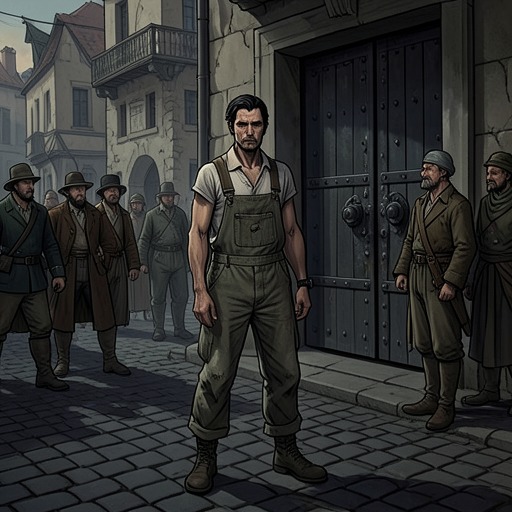
As a professor of topography at the École Supérieure de Guerre, Georges Picquart taught Alfred Dreyfus among a class of eighty students. He remembers Dreyfus as pale, solemn, myopic, and markedly different in circumstance from many of his fellow officers: Dreyfus was married, wealthy, and established in a smart apartment, while other students were often short of money. Picquart admits that his own dislike was entangled with prejudice. He regarded Dreyfus's family connections to occupied Alsace and the source of its money with suspicion, and interpreted signs of comfort and social standing through an antisemitic stereotype.
When Picquart gave Dreyfus a lower cartography mark than he expected, Dreyfus directly asked whether his Jewish identity had influenced the judgment. Picquart replied that he tried to keep personal prejudice out of his assessments. Dreyfus challenged the reassurance, pointing out that Picquart's choice of the word suggested that prejudice might indeed be relevant. The exchange matters because it shows Dreyfus identifying bias at the point where it affected an ordinary professional decision, rather than only after the case became a national controversy.
The same prejudice appears more starkly in the account of Alfred Dreyfus's public degradation. A representative of the French Ministry of Foreign Affairs treated Dreyfus's failure to resist humiliation as evidence against his innocence, then attributed that supposed passivity to Jewish character. Jean Sandherr answered with a sweeping accusation that Jews lacked patriotism, honor, and pride and betrayed the societies among which they lived. As Dreyfus passed, Sandherr turned his back. The contrast between the officials' confident generalization and Dreyfus's individual conduct is central: his behavior was not assessed on its own terms but made to confirm a prior prejudice.
The Case and the Credibility Gap
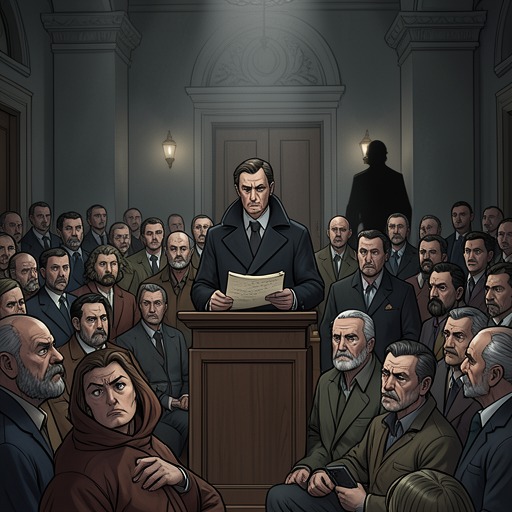
Inside the military court, the language of accusation could carry more weight than the opportunity to test its basis. After Dreyfus had taken his place, prosecutor Brisset sought a closed hearing on the grounds that the case involved national defense. Edgar Demange objected that his client was entitled to the same treatment as any other accused person. The request did not itself establish an antisemitic motive, but it formed part of a process in which crucial claims could be shielded from ordinary scrutiny while Dreyfus's own position was sharply constrained.
During testimony, Hubert-Joseph Henry described warnings from an unnamed informant and then pointed to Dreyfus as the alleged traitor. Dreyfus rose in anger and demanded to know the informant's identity; the presiding judge ordered him to sit. The scene places an unverified assertion, delivered by an officer, against the accused man's effort to answer it. Read beside the officers' explicit antisemitic assumptions, the episode reveals how unequal credibility could operate: rank lent authority to accusation, while Dreyfus's identity helped make suspicion seem self-evident to those already disposed to believe it.
That imbalance continued when Picquart investigated Charles Ferdinand Walsin Esterhazy. General Gonse told him to investigate Esterhazy if he wished, but not to bring the bordereau into the inquiry. Later, when Picquart asked whether he could address the fact that Esterhazy's handwriting matched the bordereau, he was told the issue fell outside the inquiry's scope; he also raised the use of falsified material in the dossier that had convicted Dreyfus. These restrictions are not, by themselves, proof that every decision was motivated by antisemitism. In the context of the case, however, they show how institutional control of the questions under review could preserve a verdict reached against a Jewish officer while limiting examination of evidence pointing elsewhere.
Public Demonstrations and Intimidation
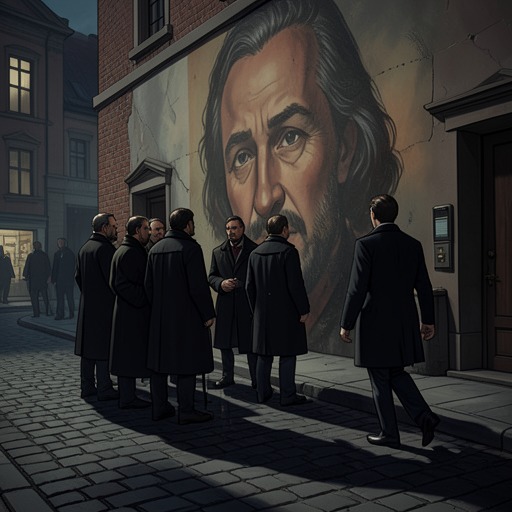
The prejudice surrounding the case became visible in crowds as well as official rooms. After Charles Ferdinand Walsin Esterhazy was acquitted, officers and spectators applauded and celebrated the army; some joined in antisemitic cries. Alfred Dreyfus's supporters, including Picquart and Mathieu Dreyfus, were jeered as they left. More than a thousand people gathered outside, chanting for Esterhazy. The celebration of the acquittal and the abuse directed at Dreyfus's defenders made the public setting hostile to anyone arguing that the case had been mishandled.
When Picquart was brought from Mont-Valérien to testify at the Paris Court of Assize, anti-Semitic demonstrators gathered in the boulevard du Palais. Some recognized him from hostile newspaper caricatures and tried to pursue him toward the courthouse before gendarmes stopped them. Mathieu Dreyfus chose not to attend. Inside, the court drew a crowd from many walks of life; outside, the demonstration made plain that a witness in a military uniform could be treated as a target because he was associated with the defense of Alfred Dreyfus.
The hostility also crossed from public speech into intimidation and destruction. On the night Picquart had to be taken out of the court by a side exit to avoid a mob, several hundred people were burning books by Émile Zola and newspapers sympathetic to Dreyfus on the opposite bank of the Seine. A crowd then ran through a street where shop windows had been broken; one damaged storefront bore the name Levy & Dreyfus. At the Zola trial, Picquart and other Dreyfusards stood together for mutual protection while roughs carrying heavy sticks filled the streets around the courthouse. The threat was not abstract: public participation in the defense of Dreyfus could expose people and businesses to intimidation.
Secrecy, Disclosure, and the Limits of Redress
Public prejudice developed alongside a struggle over what the public could know. After Figaro published a description of Dreyfus's conditions on Devil's Island, an article in L'Éclair claimed that a secret file had proved his guilt and urged the army to release it. Picquart counted nineteen people already aware of the file before adding Mathieu Dreyfus as a twentieth, then wondered how many others had heard about it. The leak unsettled him, not because it resolved the evidence, but because he feared that senior officers would respond by restricting the investigation further. Secrecy made official claims difficult to contest even as press coverage carried them into public debate.
When Godefroy Cavaignac cited secret documents in the Chamber of Deputies, Picquart and Fernand Labori drafted an open letter to Prime Minister Henri Brisson. Picquart stated that he could show that two documents dated 1894 did not apply to Dreyfus and that a document dated 1896 showed signs of forgery. The intervention moved the dispute beyond military channels, but the need for a public appeal also testified to the obstacles facing those who sought to challenge the official account.
Even the prospect of freedom did not settle the question of public honor. When Picquart learned that Alfred Dreyfus would accept a pardon, he objected that accepting it amounted, technically, to an admission of guilt. Jean Jaurès had prepared a statement for Dreyfus to issue on leaving prison, declaring that he would continue to seek the overturning of the judicial error of which he remained the victim. The distinction between release and exoneration underscores what the affair's antisemitic climate had helped sustain: a man could be freed without having his innocence publicly established, while the prejudice that had marked his case continued to shape the reception of his defenders.